As the manufacturing sector faces mounting pressure from all directions—from volatile energy costs to increasingly stringent environmental regulations—the critical question for manufacturers today is no longer simply, “When should we approve the budget for new technology?” Instead, it is: “Every day, how much energy are our production lines wasting, and how much unnecessary carbon are we emitting without even realizing it?”
Machines left running in warm-up mode longer than necessary, small leaks in compressed-air systems, or workplace air-conditioning set below the required standard may seem insignificant in everyday operations. However, when these practices are repeated across hundreds of machines, 365 days a year, small inefficiencies accumulate into substantial Energy Loss—quietly eroding profitability while standing in the way of an organization’s sustainability goals.
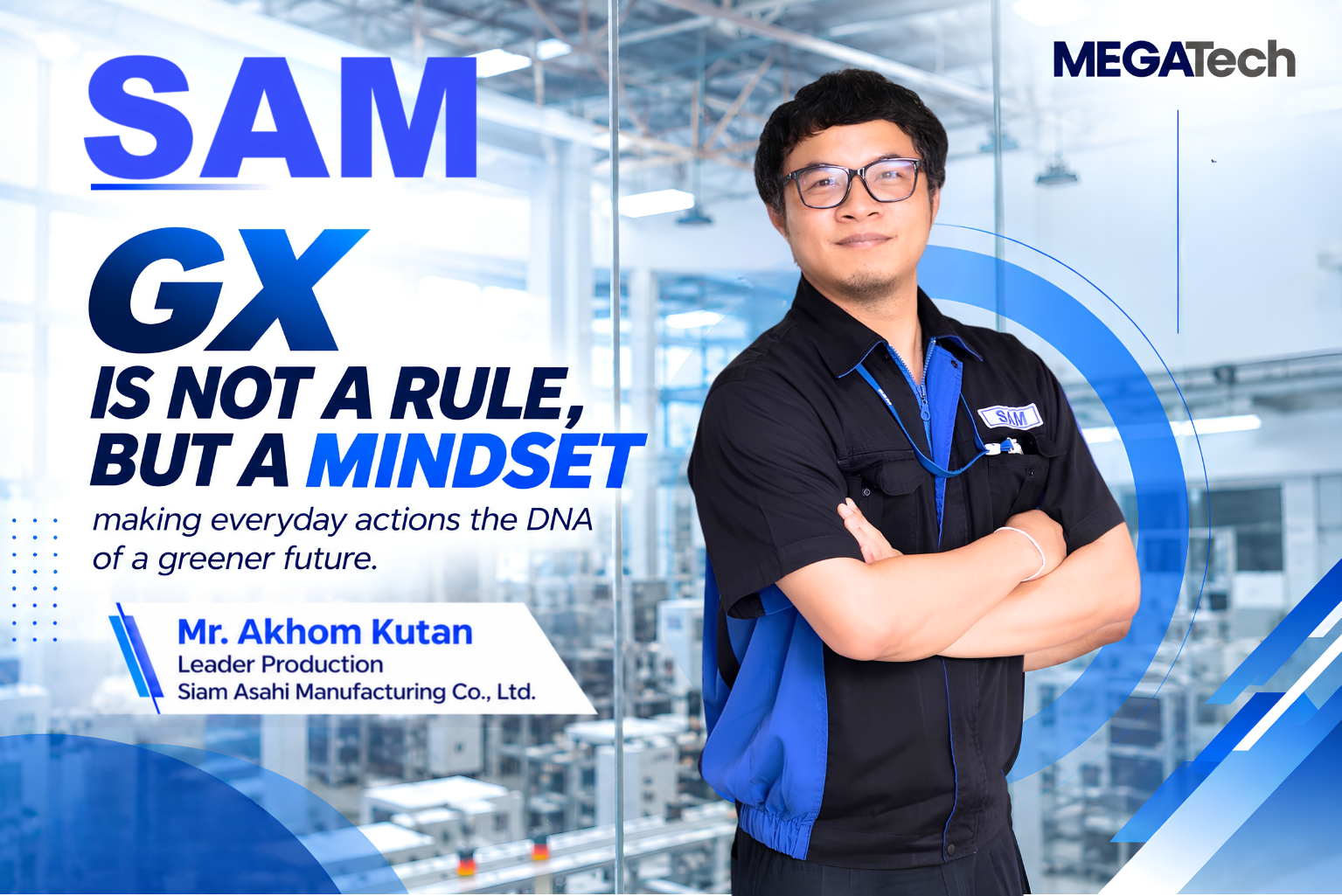
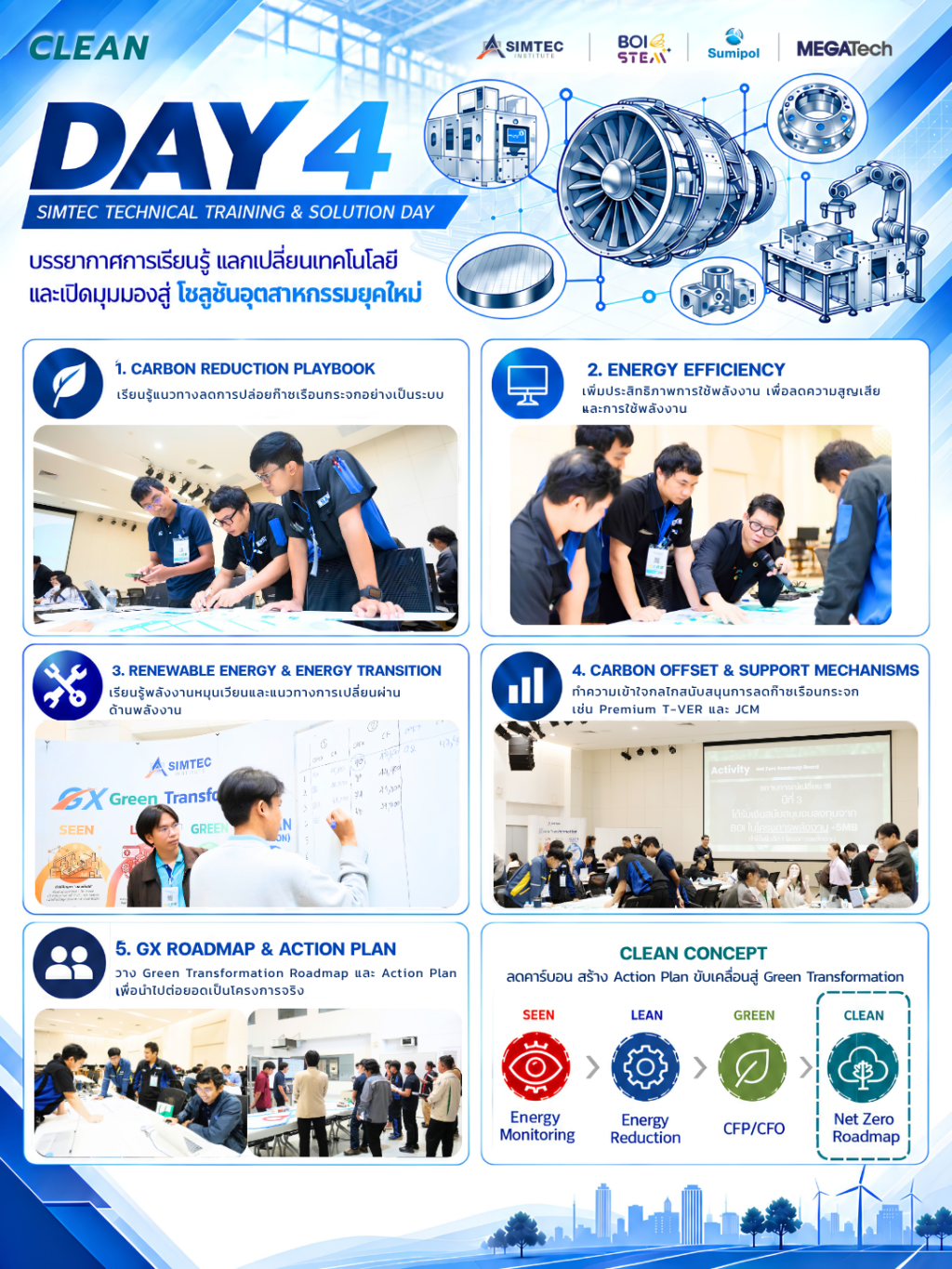
MEGA Tech spoke with Mr. Akhom Kutan, Leader Production at Siam Asahi Manufacturing Co., Ltd., a frontline manufacturing professional who participated in the “GREEN TRANSFORMATION for Next-Generation Factory Leaders” programme organized by the Sumipol Institute of Manufacturing Technology (SIMTEC). His perspective reveals an important shift in thinking: the transition towards greener manufacturing does not necessarily begin with massive capital investment. It begins by changing the mindset of production personnel, enabling them to see “loss” through a new lens—one that connects production, energy and carbon as part of the same equation.

Siam Asahi Manufacturing Co., Ltd.
TURNING HIDDEN LOSS INTO MEASURABLE DATA From SEEN to LEAN
For production professionals, one of the most significant changes in perspective comes from understanding the systematic connection between SEEN and LEAN.
Traditionally, production losses have often been assessed based on familiarity or assumptions—for example, believing that leaving a machine running before production begins has little impact. However, by applying Industrial IoT and sensor technologies to establish Process & Energy Visibility (SEEN), routine practices that were previously overlooked can be converted into measurable data, revealing both energy consumption and its associated cost in real time.
“SEEN makes previously overlooked losses clearly visible. Once we can see the problem through data and identify its true root cause, we can then apply LEAN principles to eliminate waste in the production line precisely where it occurs.”
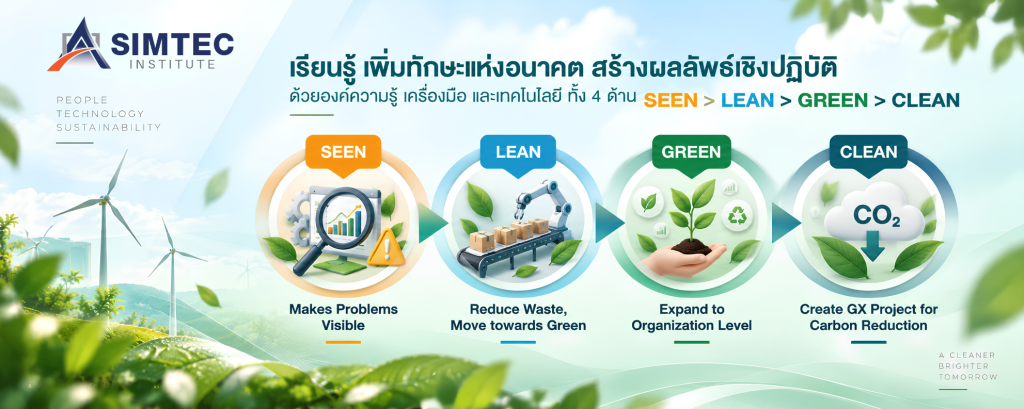
Making losses “visible” transforms conventional energy-saving campaigns—which often rely simply on asking employees for cooperation—into measurable cost-management KPIs that frontline teams can monitor, analyse and improve as part of their daily operations.
TACKLING ENERGY LOSS: Address Idle Loss & Over Supply Before Investing
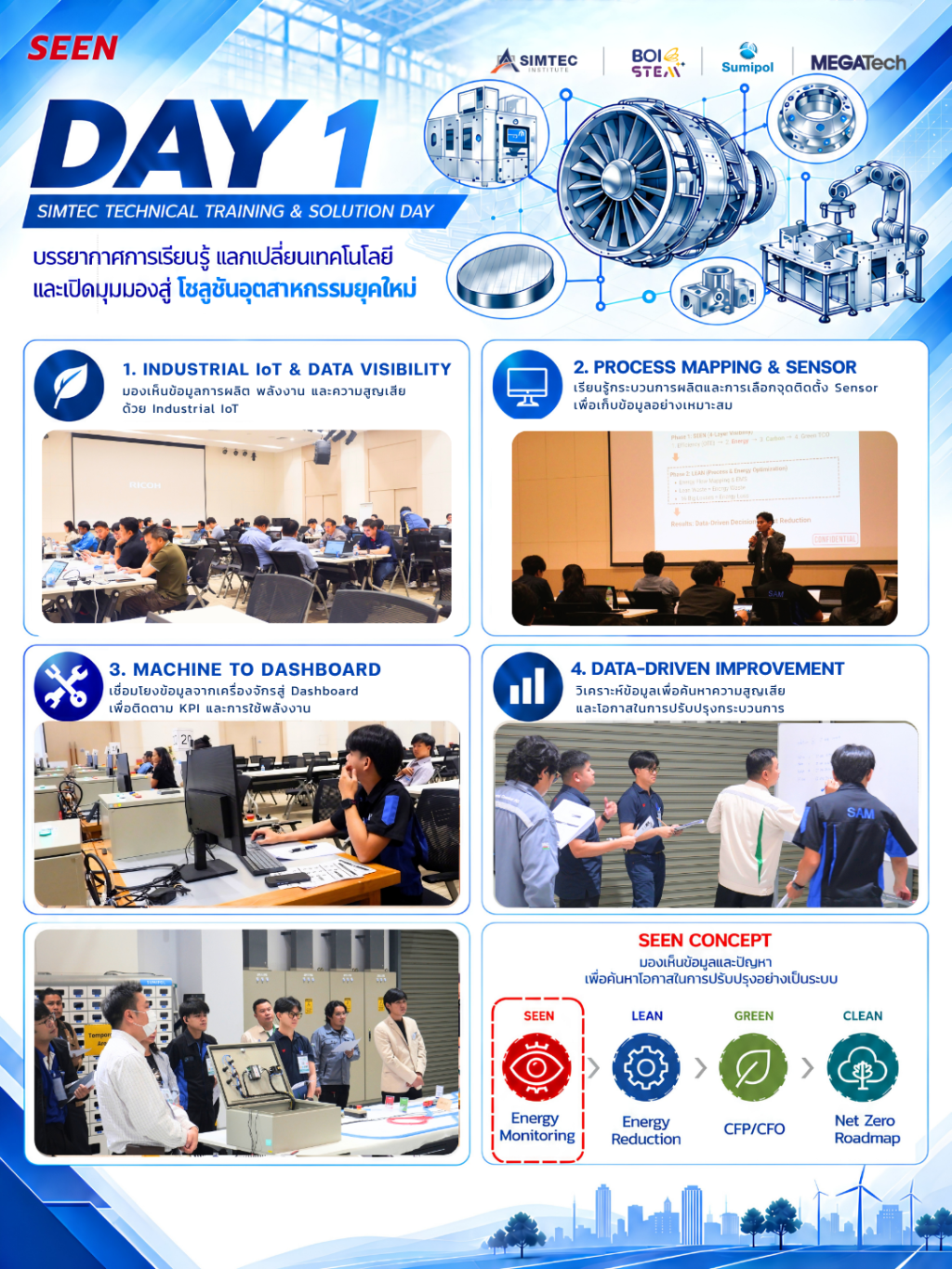
Through hands-on exercises at SIMTEC’s workshop stations, Mr. Akom identified two major forms of energy loss that can easily remain hidden within production operations:
1. Idle Loss: Energy consumed unnecessarily while machinery is idle or in standby mode without producing any output.
2. Over Supply Loss: Resources or energy supplied beyond the actual requirements of a process. For example, if a work area requires a controlled temperature of 25°C but the air-conditioning system is set to 20°C, the additional energy consumed does not improve product quality. Instead, it becomes a hidden cost that delivers no added value.
This leads to an important question: “Before requesting approval for a new machine or an expensive energy-saving system, have we first examined whether the resources and equipment we already have are being used to their full potential?”
Process Optimization and the reduction of Idle Loss can deliver immediate Quick Wins, often without requiring additional capital investment.
STRENGTHENING THE “SOFTWARE OF MINDSET” To Unlock the Full Potential of Hardware
From an environmental perspective, Siam Asahi Manufacturing has been pursuing greenhouse-gas reduction initiatives continuously for the past two to three years, including the installation of solar rooftop systems and the adoption of more energy-efficient machinery. However, Mr. Akom believes that the most important element that must be developed alongside these technologies is the mindset of employees.
For Mr. Akhom, the training changed not only the way he looks at the production floor, but also the way he thinks and behaves in everyday life.
Consider something as simple as shopping at a supermarket. We may normally look only at price, quantity or value for money. But once we understand the concept of a Carbon Footprint, the way we look at products begins to change. We start paying greater attention to Carbon Labels and other environmental labels displayed on packaging.
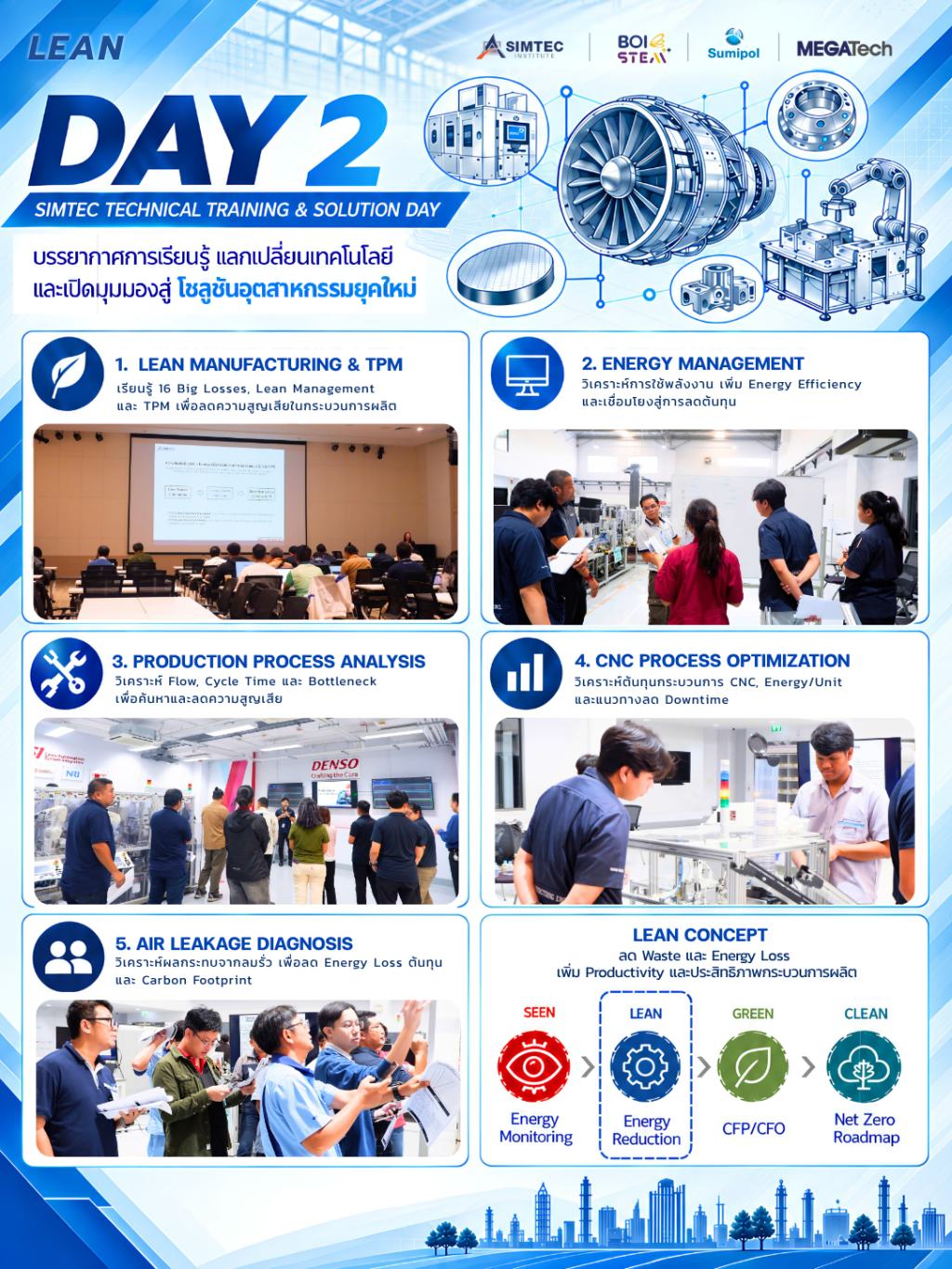
Making more environmentally conscious purchasing decisions in everyday life does not have to be complicated. It can begin with a few simple principles:
- Choose products with a lower carbon footprint (lower CFP): If two beverages are similar in quality and price, choosing the one with a lower stated greenhouse-gas footprint means supporting a product that has generated less environmental impact through its production and transportation processes.
- Support environmentally responsible manufacturers (CFO): Choosing products from brands or organizations with clear carbon-reduction policies means using our purchasing power as a vote in favour of more sustainable business practices.
- Consider packaging and transportation: Choose products with recyclable packaging where possible, or support locally produced goods to reduce the distance and energy required for transportation.
“Once we understand how carbon is calculated in a factory, we begin to recognize the ‘hidden carbon’ embedded in the products we buy every day. Energy conservation no longer ends when we clock out from work; it becomes part of the way we live and the choices we make to support environmentally responsible products every day,” Mr. Akom emphasized.
THE EQUATION FOR SUCCESS: When Bottom-Up Meets Top-Down
Reflecting on his own development, Mr. Akom believes the training increased his understanding from almost 0% to around 50%. The “remaining 50%”, in his view, lies in turning that knowledge into practical action within the organizational structure.
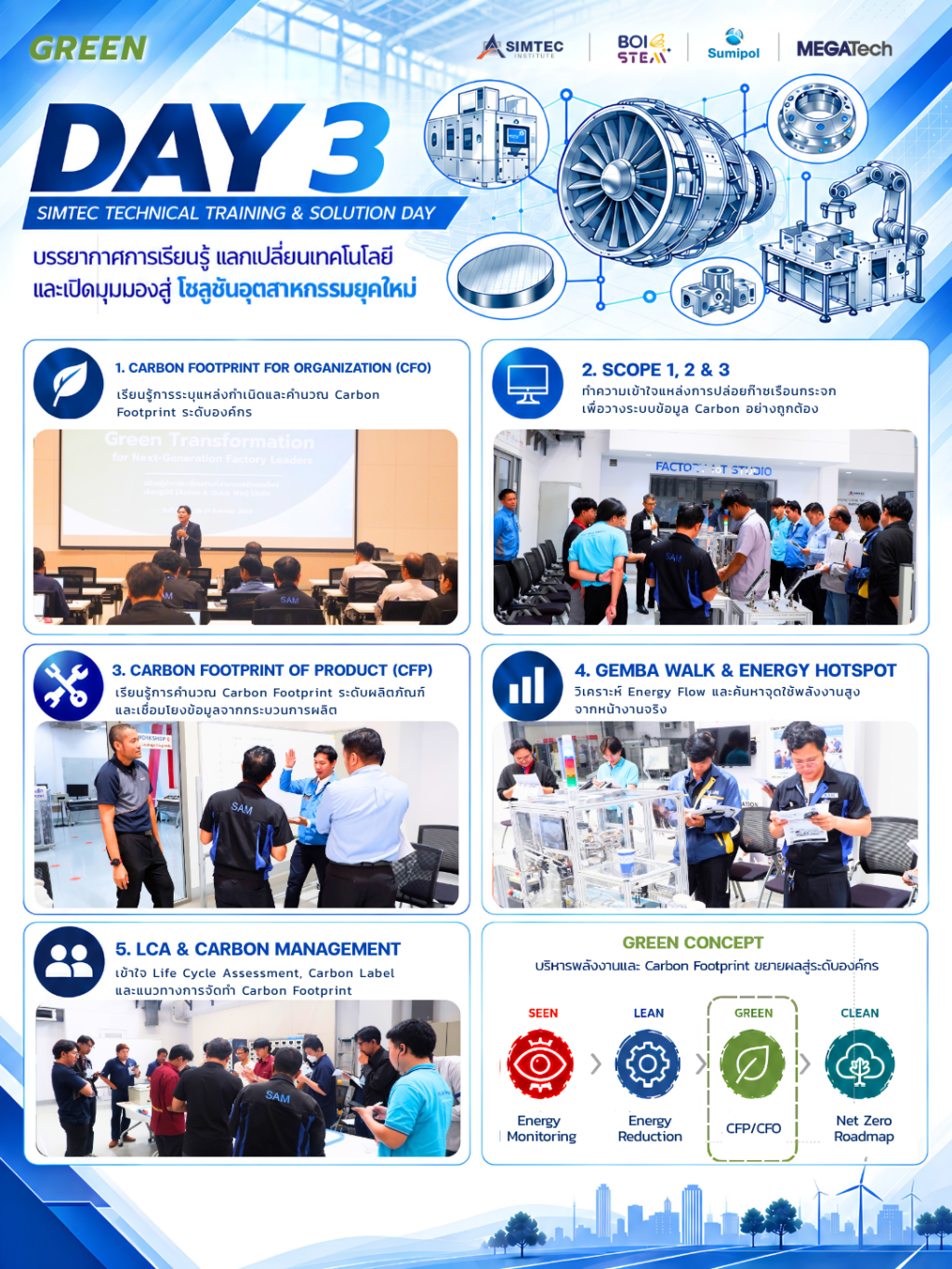
At the operational level (Bottom-up): Teams need expertise in SEEN & LEAN to scan their operations, identify hidden losses and take action to eliminate waste directly on the shop floor.
At the management level (Top-down): Leaders need an understanding of GREEN & CLEAN to see the bigger picture—including economic feasibility, supporting mechanisms and regulatory requirements—so that they can make informed decisions and approve projects requiring capital investment.
If frontline teams identify opportunities for improvement but management cannot see their value, energy-saving projects may never move beyond the proposal stage. Conversely, if management sets carbon-reduction targets but frontline employees cannot see how those targets can be translated into action, meaningful transformation will remain out of reach.
Successful Green Transformation therefore depends on creating a common language that connects the production floor with the management boardroom.
EXCLUSIVE TAKEAWAY | A MESSAGE FOR BUSINESS LEADERS
“The heart of Green Transformation is not hardware—it is the power of the ‘Human Mindset.’ When people on the shop floor can see every hidden source of waste, environmental responsibility is no longer simply a ‘rule’ they are required to follow. It becomes a ‘way of life’ they choose to practise every day—and that is the DNA of the organization of the future.”
Mr. Akhom Kutan
Production Leader
Siam Asahi Manufacturing Co., Ltd.