A single purchasing decision has implications beyond the price on a quotation. It affects production operations, maintenance workloads, supplier delivery schedules and the resources required throughout the process. Procurement therefore serves as an important link in advancing Green Transformation through everyday operations.
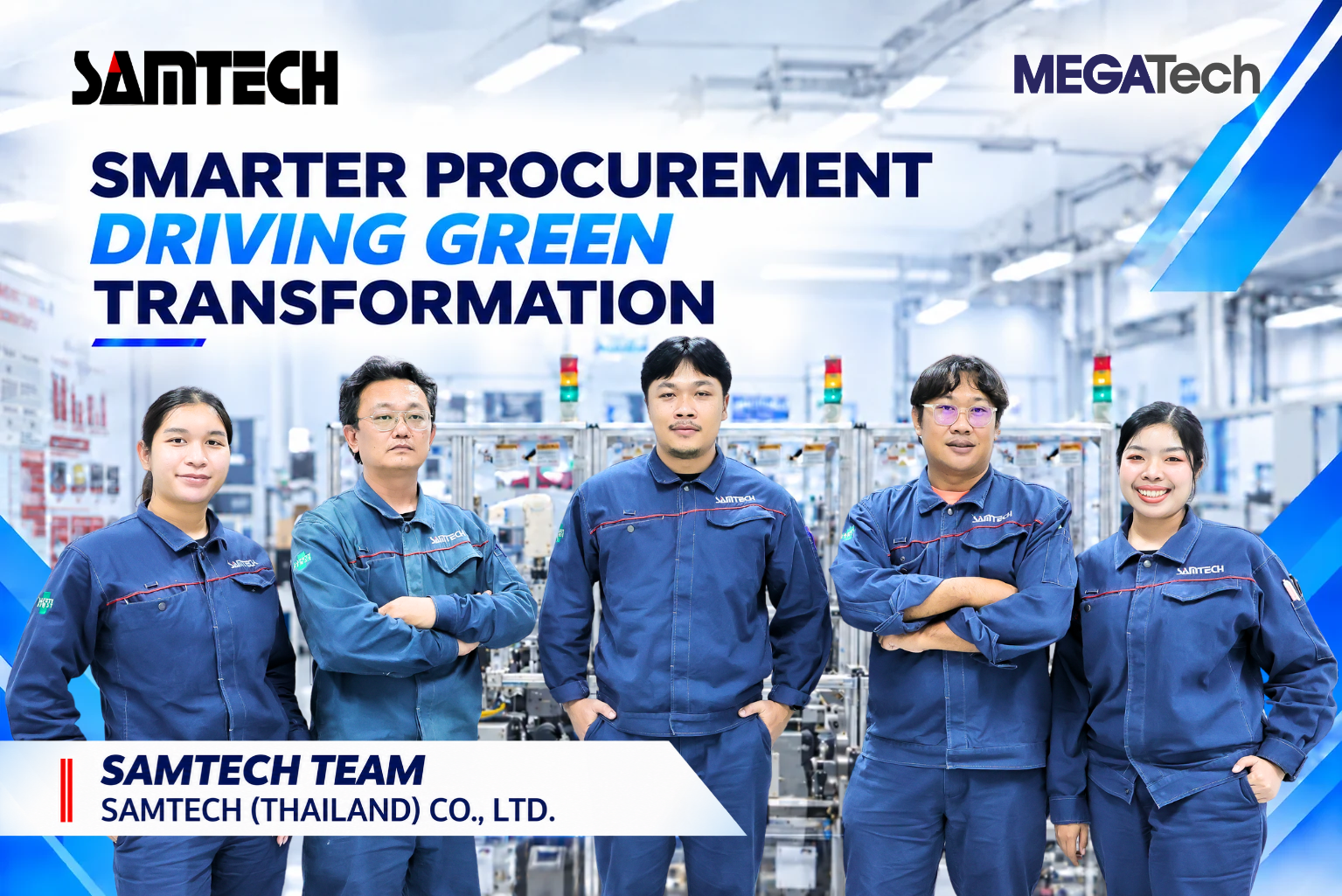
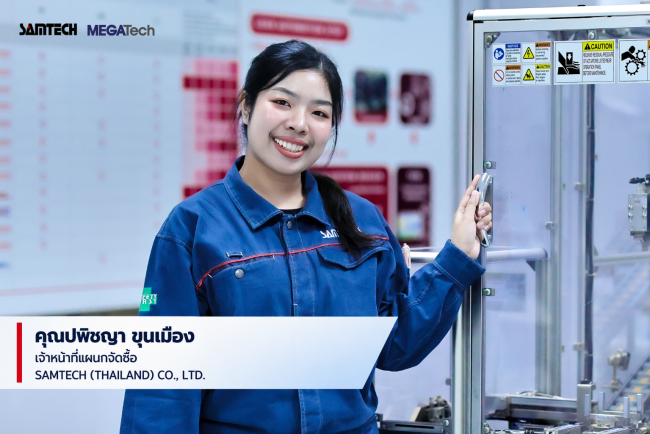
MEGA Tech shares the perspective of Ms. Papitchaya Khunmuang, Staff Purchase at SAMTECH (Thailand) Co., Ltd., a young procurement professional who participated in SIMTEC’s Green Transformation for Next-Generation Factory Leaders programme. The course gave her an opportunity to reassess her role, from coordinating requirements within the factory to evaluating the broader value and implications of purchasing decisions.
Recognising The Role in Green Transformation
Before joining the programme, Ms. Papitchaya had heard of Green Transformation but had not clearly understood its connection to procurement. As the course progressed, she discovered how sourcing decisions, supplier collaboration and delivery planning all influence how efficiently an organisation uses its resources.
“Before the course, I had no real knowledge of Green Transformation. I had heard about it, but it felt far removed from my work. Through the training, I began to understand its relevance to procurement and realised that I could play a part in driving it forward.”
Previously, cost reduction in procurement had focused on comparing prices from multiple suppliers and reviewing purchase prices against the previous year. Supplier assessments also covered the standards relevant to the products being sourced.
The training broadened her perspective to include ordering frequency, appropriate delivery schedules and opportunities to coordinate requirements across departments. These considerations helped her recognise that procurement can improve efficiency even before goods arrive at the factory.
Applying Lean Thinking to Ordering and Delivery
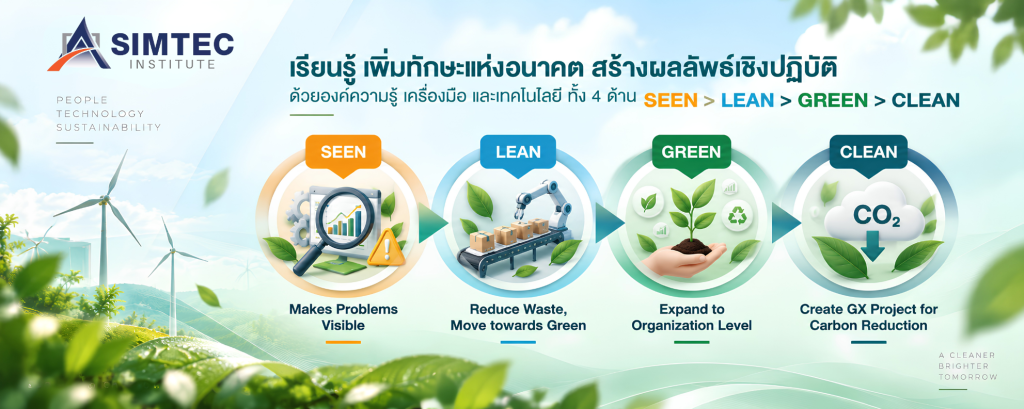
Within the SEEN → LEAN → GREEN → CLEAN learning framework, Lean was particularly relevant to her work. It helped her identify repetitive activities and opportunities to improve processes. One example was different departments ordering from the same supplier at different times. Although some suppliers had already reduced their delivery frequency, there was still scope to improve how internal requirements were consolidated.
“At present, purchase requests continue to come in at different times. If several departments are ordering from the same supplier, we could group their requirements and coordinate our ordering schedules. This could reduce repetitive work on our side and mean fewer deliveries for the supplier.”
Ms. Papitchaya would like to discuss this idea with the relevant colleagues to assess its feasibility against actual operational requirements. Appropriate scheduling could reduce coordination work and unnecessary delivery trips while ensuring that materials and equipment remain available for production.
The key is to review the process collaboratively, involving those requesting purchases, the procurement team and suppliers, to identify working practices that improve efficiency for everyone.
Net Zero Roadmap Plan Encourages More Comprehensive Decisions
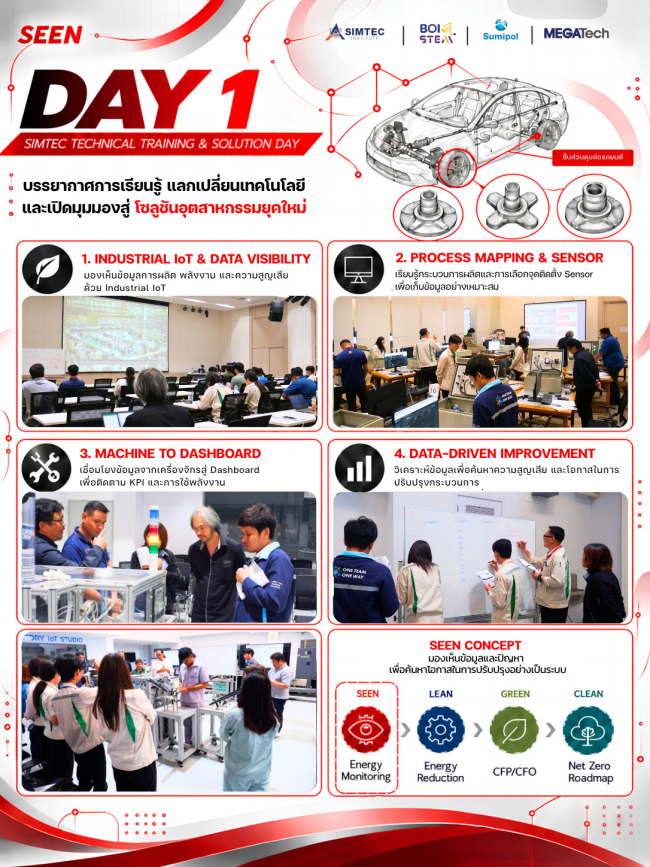
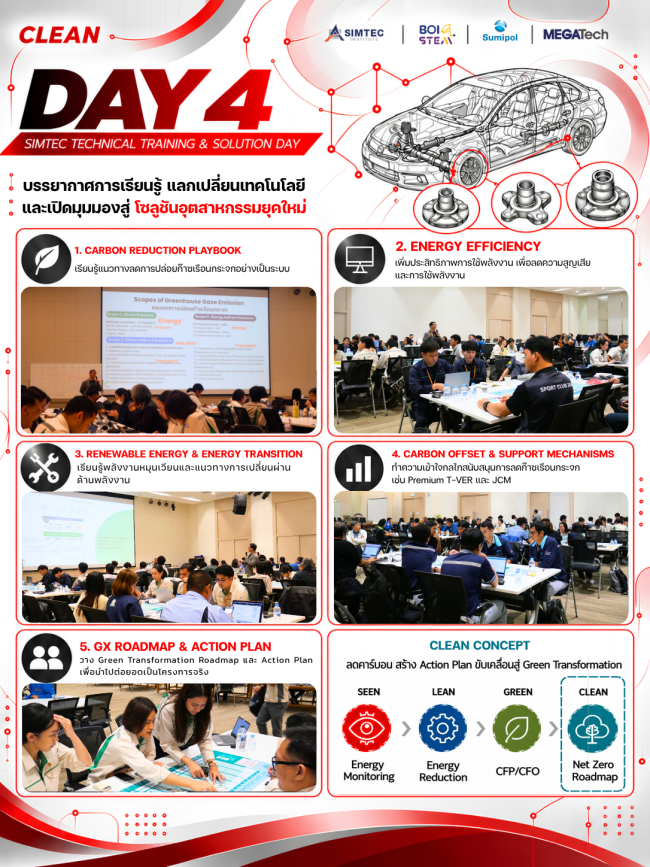
Another experience that broadened her perspective was the Net Zero Roadmap Plan game-based workshop. It allowed participants to explore options and develop plans themselves, connecting the goal of net zero with tangible decision-making scenarios.
“The Net Zero Roadmap Plan workshop took a subject that had seemed quite distant and turned it into something we could think through and plan for ourselves. It showed me that every decision needs to be considered from several angles, including value for money, payback period and potential effects on other areas. I can apply this way of thinking directly to my procurement work.”
The activity taught her to consider how different options and their consequences are connected. A decision that appears cost-effective in one respect may involve conditions or implications elsewhere. Understanding the relevant information and constraints is therefore essential before choosing a course of action.
For procurement, this approach supports a more comprehensive assessment of proposals, covering suitability for the intended application, expected returns, payback periods and associated risks. The learning also provides a stronger foundation for discussions with technical teams and decision-makers, helping to connect cost considerations more clearly with organisational objectives.
Connecting an Engineering Background with the Value of Procurement
Her engineering education had already given her a foundation of technical knowledge. However, her day-to-day procurement responsibilities had not always provided opportunities to connect that knowledge fully with practical applications.
Ms. Papitchaya is responsible for purchasing machinery spare parts and equipment for the maintenance department, including programmable logic controllers (PLCs). Hands-on activities and learning how to present data on a dashboard helped her better understand the functions of equipment she had previously purchased. The experience also revealed a broader connection between her engineering knowledge and her procurement role.
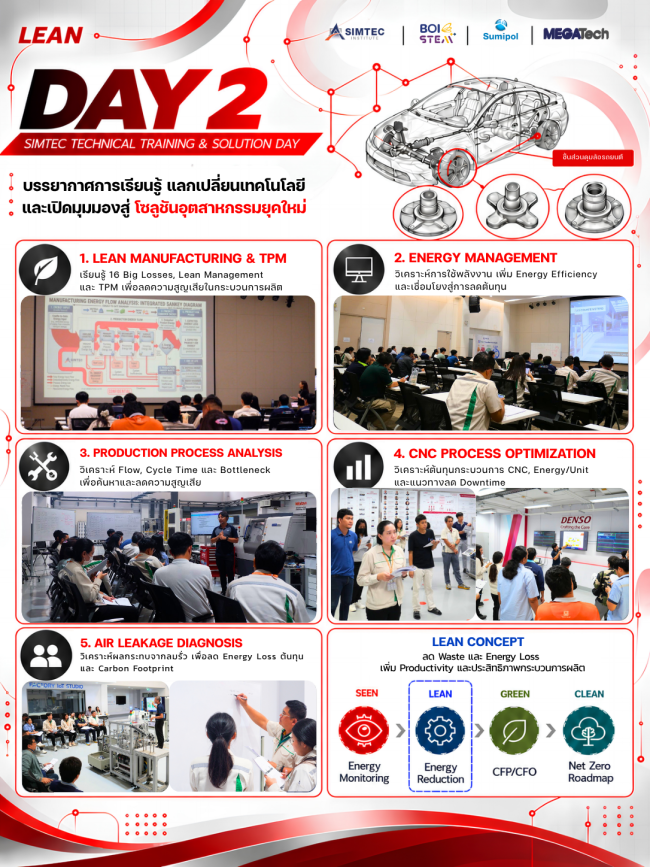
“As an engineering graduate, I found that this training helped me connect the knowledge and skills I had developed during my studies with my current work more clearly. I came to see that procurement involves data analysis, risk management, cost control and decisions across multiple dimensions. It gave me a broader understanding of my role and a greater appreciation of the value of my work.”
This understanding is valuable when working with other departments because procurement connects users’ requirements with suppliers’ proposals. A clearer grasp of the technical reasoning and operating context can help her ask more relevant questions and coordinate requirements more effectively.
Learning Together to Strengthen Cross-Department Collaboration
The company sent five employees to the programme, representing Procurement, Machining, Production Engineering, Production Planning and HR. This created opportunities to exchange perspectives across related functions.
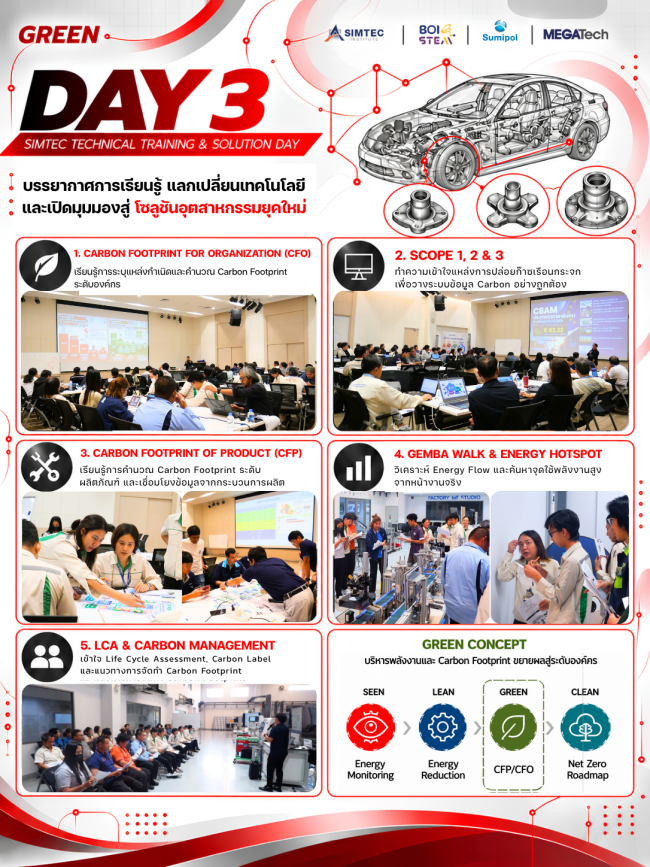
Each participant may identify different improvement opportunities according to their responsibilities. Learning together, however, helps them better understand one another’s reasoning and constraints. For procurement, the benefits of the workshops therefore extend beyond process knowledge to a better understanding of the colleagues with whom the team coordinates every day.
As a young professional, she also found that the training helped her recognise opportunities to contribute to organisational change by questioning familiar processes and discussing new ideas with her supervisor and relevant colleagues.
EXCLUSIVE TAKEAWAY
When procurement understands the wider implications of its decisions, the organisation has greater opportunities to create value.
This young professional’s experience demonstrates the value of Green Transformation in connecting technical knowledge with business decisions, from reviewing ordering and delivery schedules to assessing value for money, payback periods and the implications for other departments.
For business leaders, enabling procurement teams to learn alongside production and support functions builds a stronger foundation for collaboration. It also gives younger employees opportunities to propose improvements within their areas of responsibility—an important step towards connecting sustainability objectives with everyday organisational decisions.
Ms. Papitchaya Khunmuang
Staff Purchase
SAMTECH (THAILAND) CO., LTD.