Before asking, “What technology should our factory invest in next?”—pause for a moment and take a closer look at the shop floor. Do we really have a clear picture of where our factory is losing energy, efficiency, and resources every minute of every day?
Amid growing environmental awareness and the global push toward Net Zero, manufacturers are under increasing pressure to transform their operations through Green Transformation (GX). For many factory leaders, the path to GX may seem to begin with major investments: expensive innovations, next-generation machinery, or advanced automation systems designed to replace existing processes. But true and sustainable green transformation may not begin with new technology at all. It may begin with something far more fundamental: discovering the hidden losses already embedded in the way we work today.
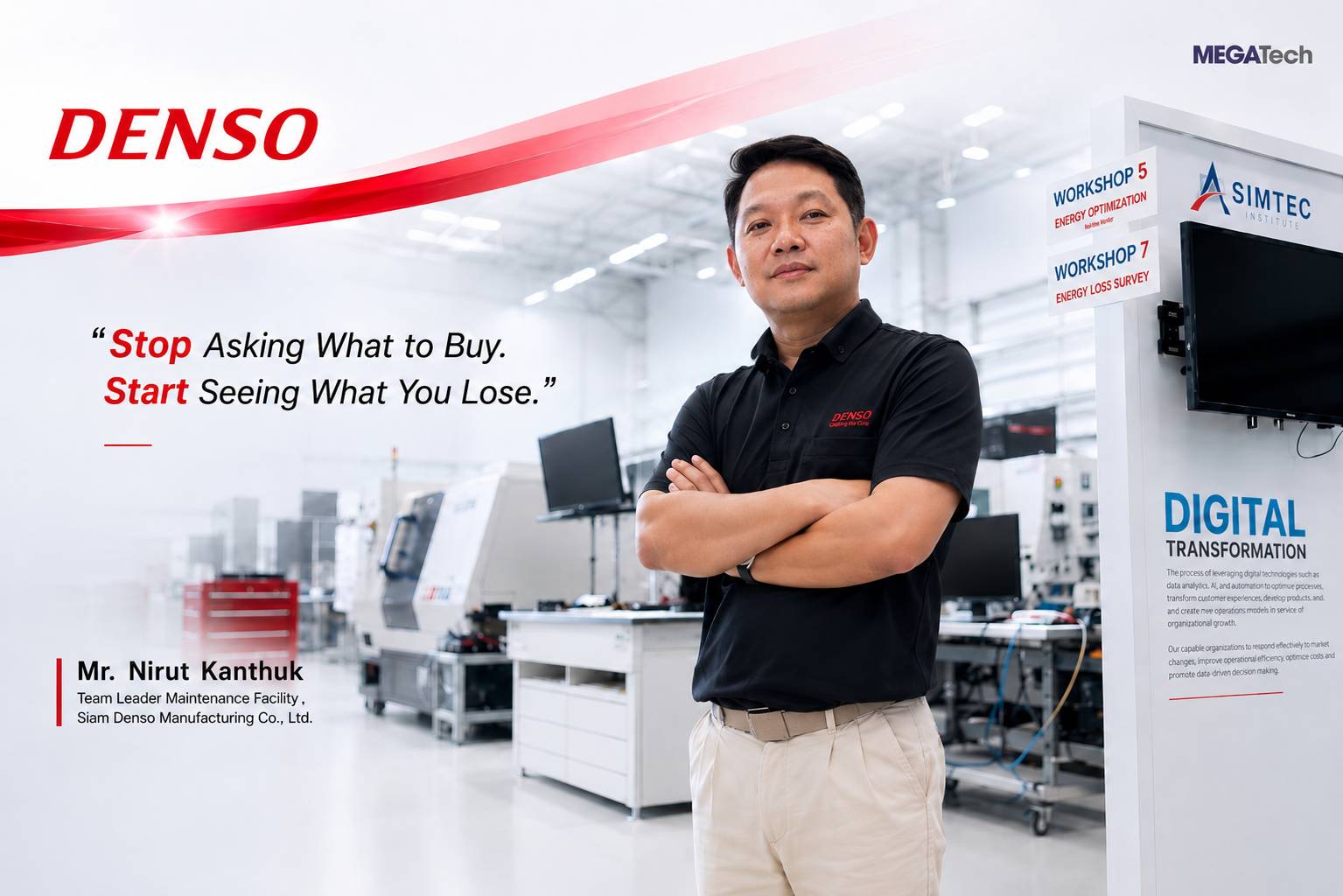
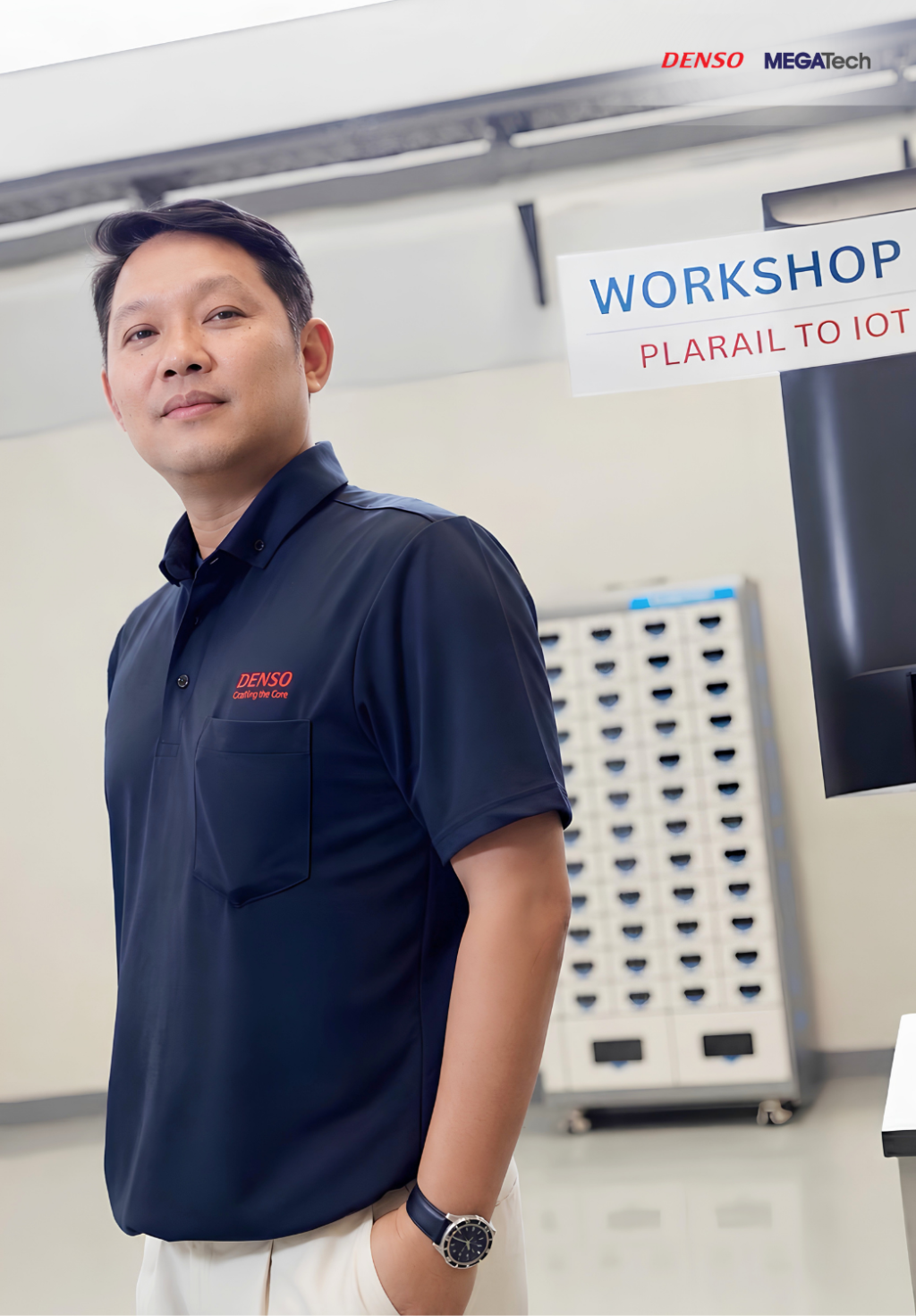
In this special feature, MEGA Tech had the privilege of speaking with Mr. Nirut Kantuk, Team Leader, Maintenance Facility, Siam Denso Manufacturing Co., Ltd., who shares his firsthand perspectives, experiences, and the shift in mindset that followed his participation in the intensive program GREEN TRANSFORMATION for Next-Generation Factory Leaders, organized by SIMTEC. His experience offers an important perspective for today’s manufacturing leaders: before investing in what comes next, we may first need to understand what is being lost right now.
From Technology-Centric to Data-Driven: Rethinking the Mindset for Pioneering GX
Mr. Nirut reflected on his perspective before participating in the program:
“Originally, my team and I tended to view Green Transformation as being about bringing in new innovations, technologies, or innovative machinery and installing them in the factory. But after participating in the course and completing the workshops systematically, my perspective changed completely. We realized that the true starting point should be to go into the actual workplace and examine what is happening there, in order to establish clear data about the real situation—what is actually happening and where we are losing energy as well as costs.”
This shift in mindset represents an important turning point for professionals in the industrial sector. Instead of allowing technology to take the lead—a Technology-Driven approach—the focus shifts to using real problems and on-site data as the starting point—a Data-Driven approach.
Once an organization can clearly identify the hidden losses within its operations, it can analyze their causes, improve existing processes to achieve maximum efficiency, and only then consider selecting the appropriate technologies to further support those improvements.
Mindset Transformation
- The Traditional Equation: Technology (purchase technology) → Investment (make a major investment) → Result (expect results)
- The New Equation — the SIMTEC Model: Visibility (see and understand) → Measurement (measure) → Analysis (analyze) → Improvement (improve) → Technology (apply technology where it is most appropriate)
From “Knowing We Need to Save Energy” to a Practical, Shop-Floor Engineering Approach
For Siam Denso, energy management is by no means a new initiative. The organization has already been continuously implementing Green Energy initiatives and Carbon Footprint for Organization (CFO) activities. In addition, Mr. Nirut’s role is directly related to the maintenance of machinery and facilities within the factory.
What Siam Denso was looking for, therefore, was more than simply having policy-level goals such as “we must reduce carbon emissions” or “we must save energy.” The real challenge was how to translate those organizational goals into concrete actions that can be implemented on the factory floor.
“For the machinery that we are already responsible for, what methods and calculation principles can we use to determine precisely where we can recover energy efficiency? Learning at SIMTEC helped fill the technical gaps that were still missing from our existing processes in a very targeted way,” Mr. Nirut emphasized.
At the heart of this learning experience was the Energy Calculation & Diagnosis workshop. Rather than simply providing ready-made formulas, the workshop helped develop an “engineering thought process”—from determining what sets of data need to be collected, identifying where measurements should be taken and what types of instruments should be used, to calculating the impact in numerical terms.
Once a source of energy loss is identified, the next question is: How can it be addressed through the most targeted and cost-effective improvement?
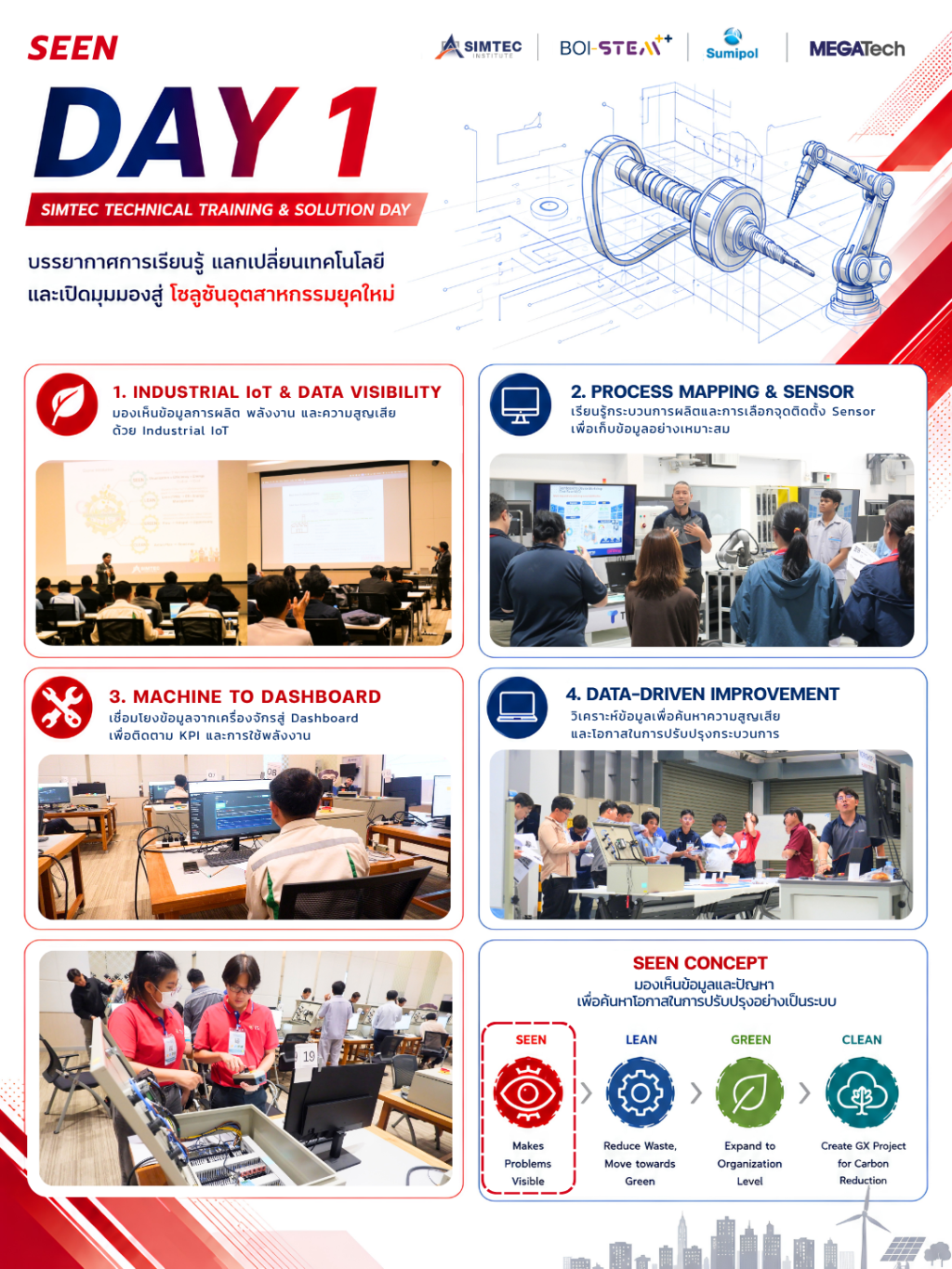
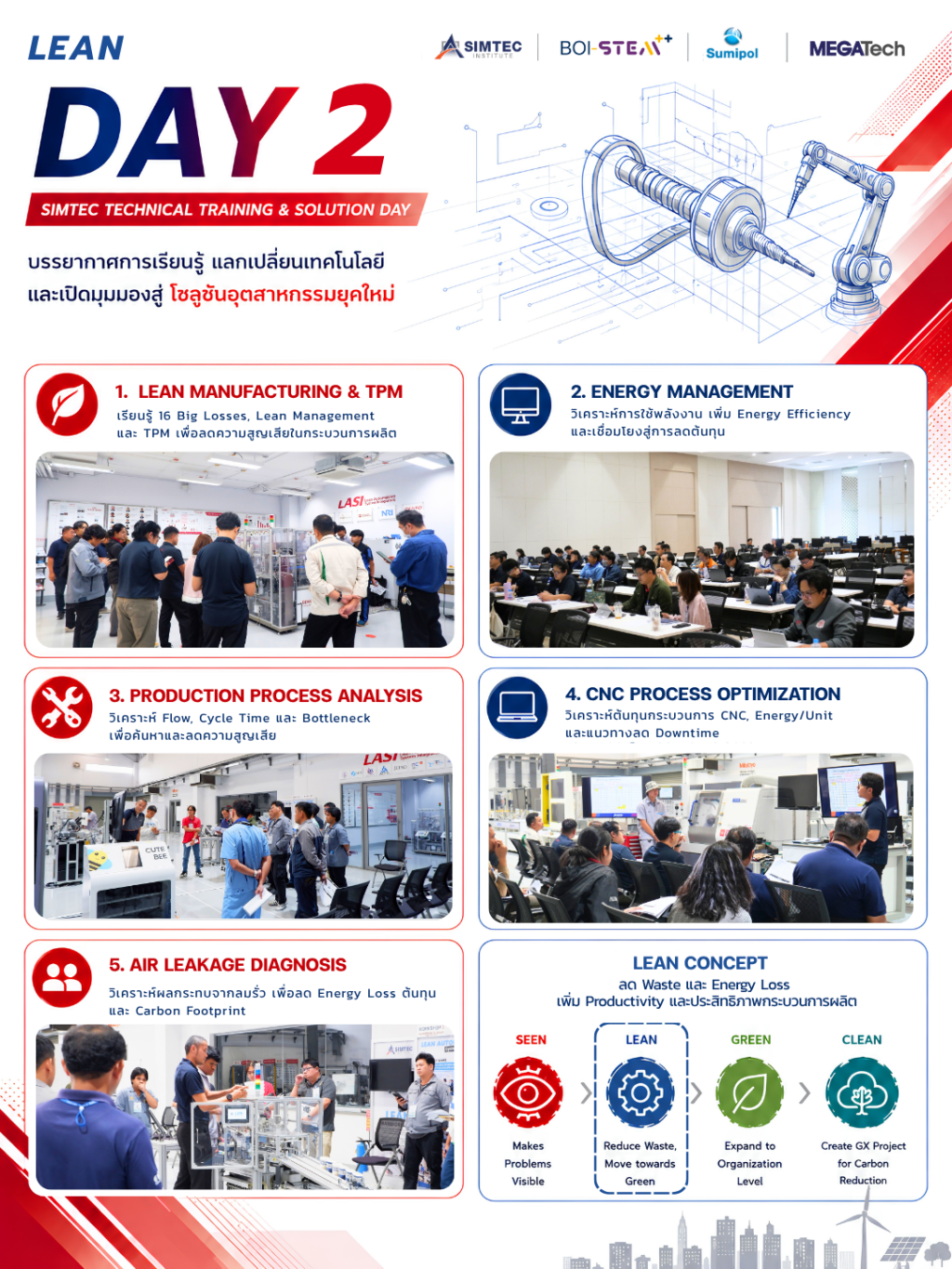
- LEAN Integration: Connecting Lean Manufacturing with energy management through Waste & Loss, Energy Efficiency, Electricity Cost Calculation, and Energy Flow Diagram.
- Practical Diagnosis: Exploring case studies and simulations based on actual processes, including CNC Optimization, Energy per Unit Calculation, and Air Leakage Diagnosis.
From 50% to 90%: The Power of Hands-On Practice in a Realistic Simulated Environment
One of the clearest examples is Air Leakage management, a classic challenge across virtually every industry. Siam Denso already has measures in place to inspect and address this issue, but the training helped complete the picture by providing a more comprehensive engineering approach.
“Before taking the course, if I were to assess my own knowledge and understanding, I would say I was at around 50%. But after going through both the theoretical learning and intensive workshops, I am confident that my knowledge has increased to 90%. I intentionally leave the remaining 10% for actual hands-on implementation on the factory floor, because when we put what we have learned into practice, we encounter the specific challenges and limitations of our own factory.”
Since every factory has different environmental conditions and production processes, some issues can be addressed immediately by the maintenance team, while others may require support from external specialists.
For example, if the goal is to reduce energy consumption in an air-conditioning system, the question is not simply, “How can we save energy?” We also need to know what parameters should be measured, what instruments should be used, where measurements should be taken, and how a Dashboard should be designed to enable actual monitoring and analysis of energy consumption.
This is also an area where SIMTEC can continue to provide support and help take these efforts further.
One of the distinctive features of learning at SIMTEC is its Learning Factory, which simulates an actual industrial factory environment, complete with machinery, measurement equipment, and intelligent control systems.
This enables participants to practice taking measurements, analyzing results, and developing solutions to problems in a simulated environment—before immediately applying what they have learned to their own factories.
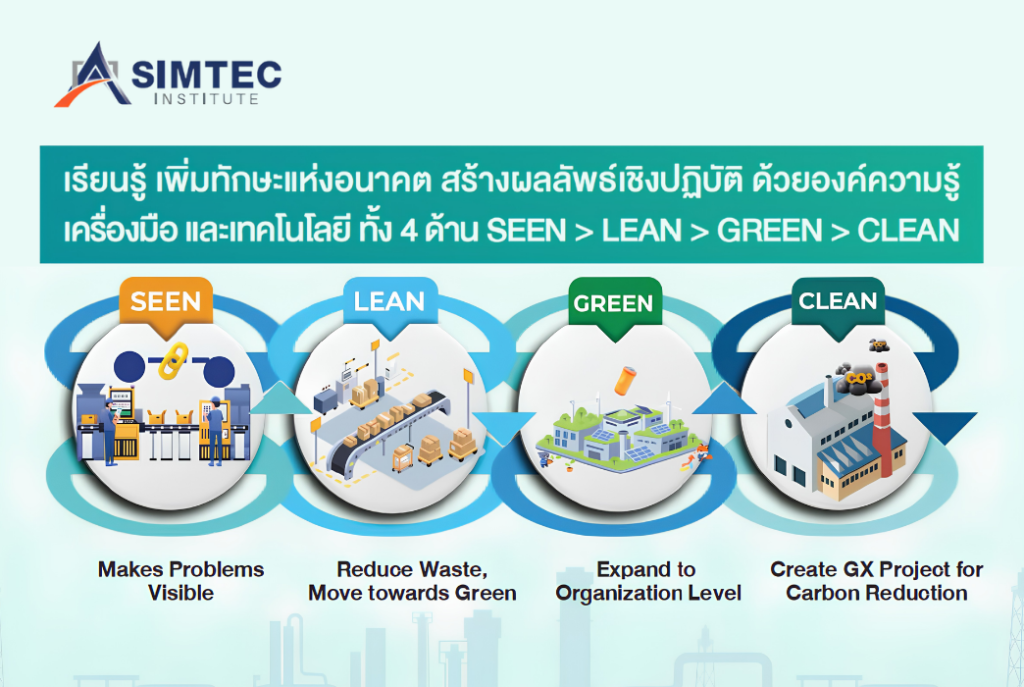
Decoding SEEN → LEAN → GREEN → CLEAN: The Four-Step Journey Toward Sustainability
When asked which part of the program left the strongest impression, Mr. Nirut did not single out any particular day. What stood out to him was the connection between all the topics throughout the course.
“I was impressed every day because each day and each course was important, and everything was interconnected. From the very first day, we started by looking at how we should see things, how we should calculate them, and how we could put what we learned into practice.”
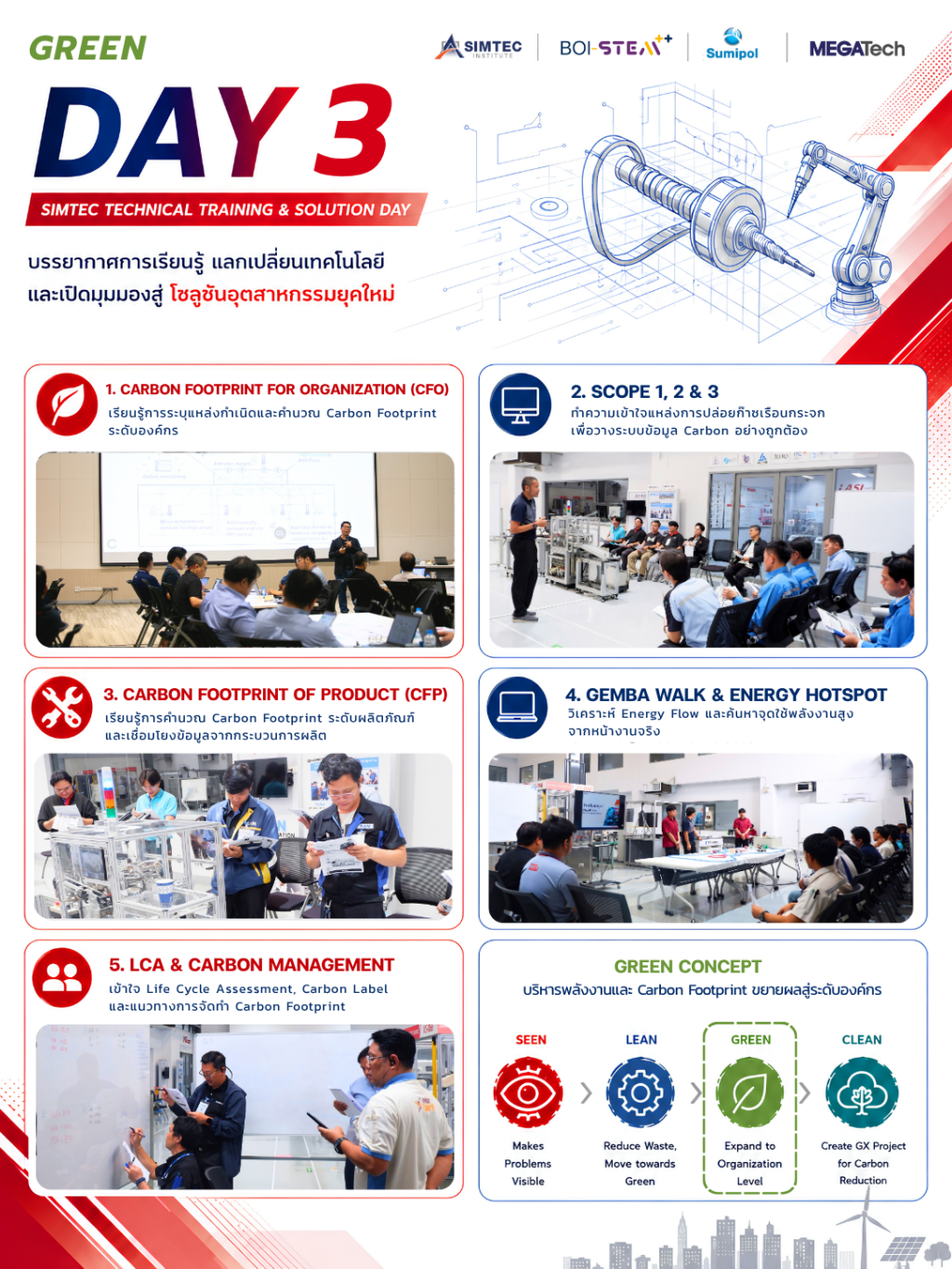
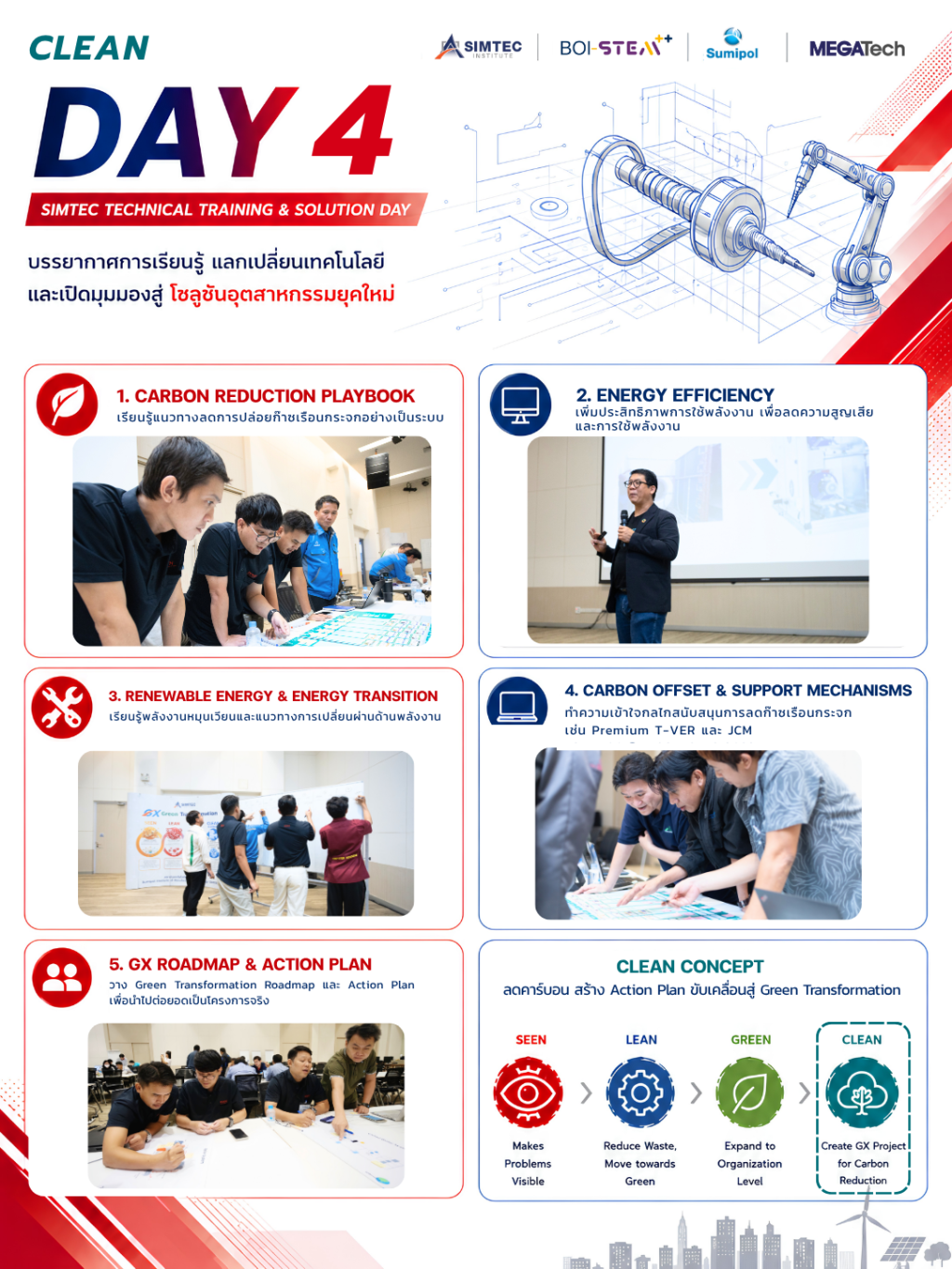
Viewed as a whole, SEEN focuses on making data and problems visible. LEAN then takes that data and analyzes it to reduce Waste and Energy Loss. GREEN connects energy and production processes with Carbon Footprint management, covering both CFO (Carbon Footprint for Organization) and CFP (Carbon Footprint of Product). Finally, CLEAN takes all of this knowledge further and turns it into practical GX Projects, Carbon Reduction Planning, Roadmaps, and Action Plans that can be applied within an organization.
What learners gain, therefore, is not four separate areas of knowledge, but one connected process: See the problem → Understand the losses → Measure the impact → Plan the transformation
Another important factor was the ability of the expert instructors to make complex technical topics—including IoT, Lean, Energy Management, CFO, and CFP—easy to understand, follow, and put into practice.
Mr. Nirut commented:
“I would like to commend all of the instructors. What impressed me most was the way they communicated. They were able to translate in-depth technology topics into something that was easy for us to understand, and made it easy to follow their way of thinking.”
Green Transformation Is Not the Responsibility of the Environmental Team—It Is Everyone’s Mission
Another important perspective that Mr. Nirut took away from the program is that Green Transformation cannot be sustainable if it is viewed as the sole responsibility of the Environment or Energy team.
Losses arising from machinery are connected to the Production team. Process improvements involve Engineering. Quality is linked to QC, while energy and Carbon data require information from multiple functions across the organization.
“I would like to recommend this course to my colleagues and fellow professionals working in industrial factories or related systems, so that they can properly understand and apply the SEEN – LEAN – GREEN – CLEAN approach and put it to practical use.”
Mr. Nirut further emphasized that transformation cannot be achieved by any single department. It requires collaboration across the entire factory—including Production, QC, and other relevant functions—not just the Environmental team.
Ultimately, Green Transformation is not simply about reducing Carbon. It is about creating a shared way of thinking across the entire organization: enabling every department to see the same problems through the same data, understand the losses involved, and work together to identify opportunities for improvement.
When everyone sees the same picture, transformation is no longer simply an “environmental project.” It becomes part of the way the organization works every day.
Because true sustainability may not begin with the most advanced technology. It begins with people across the organization seeing the same problems—and being ready to change them together.
Executive Takeaway
The journey toward true Green Transformation is not measured by how much an organization spends on new technology. It is measured by its ability to see and eliminate losses on the factory floor.
The mindset needs to shift from asking:
“What should we buy next?”
to asking:
“Do we clearly see what we are losing today?”
That is the true starting point for the factory of the future.
Mr. Nirut Kantuk, Team Leader, Maintenance Facility, Siam Denso Manufacturing Co., Ltd.